Our trainings are
hands-on. | practical. | evidence-based. | proven.
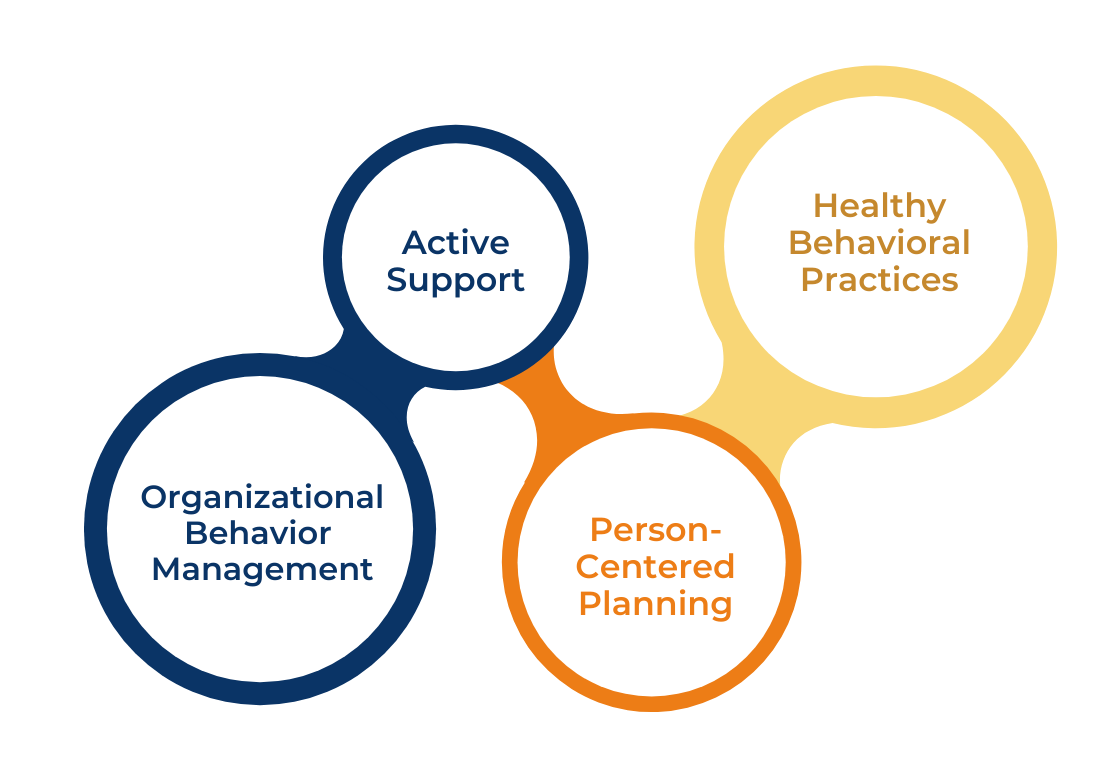
Training Content By Role
Active Care for DSPs
The Core Skills of Engagement
Positive Interactions
DSPs are trained to provide high-frequency, meaningful connections using descriptive praise, smiles, and eye contact to foster a supportive and engaging environment.
Preference & Choice
Staff learn to facilitate frequent, meaningful choices throughout the day, ensuring that daily activities are driven by the participant's own interests and agency.
Graded Assistance
DSPs master a hierarchy of support -providing the least intrusive assistance necessary to help individuals complete tasks "with" staff rather than having things done "for" them.
Active Care for Supervisors
The Systems of Engagement
Observations & Feedback
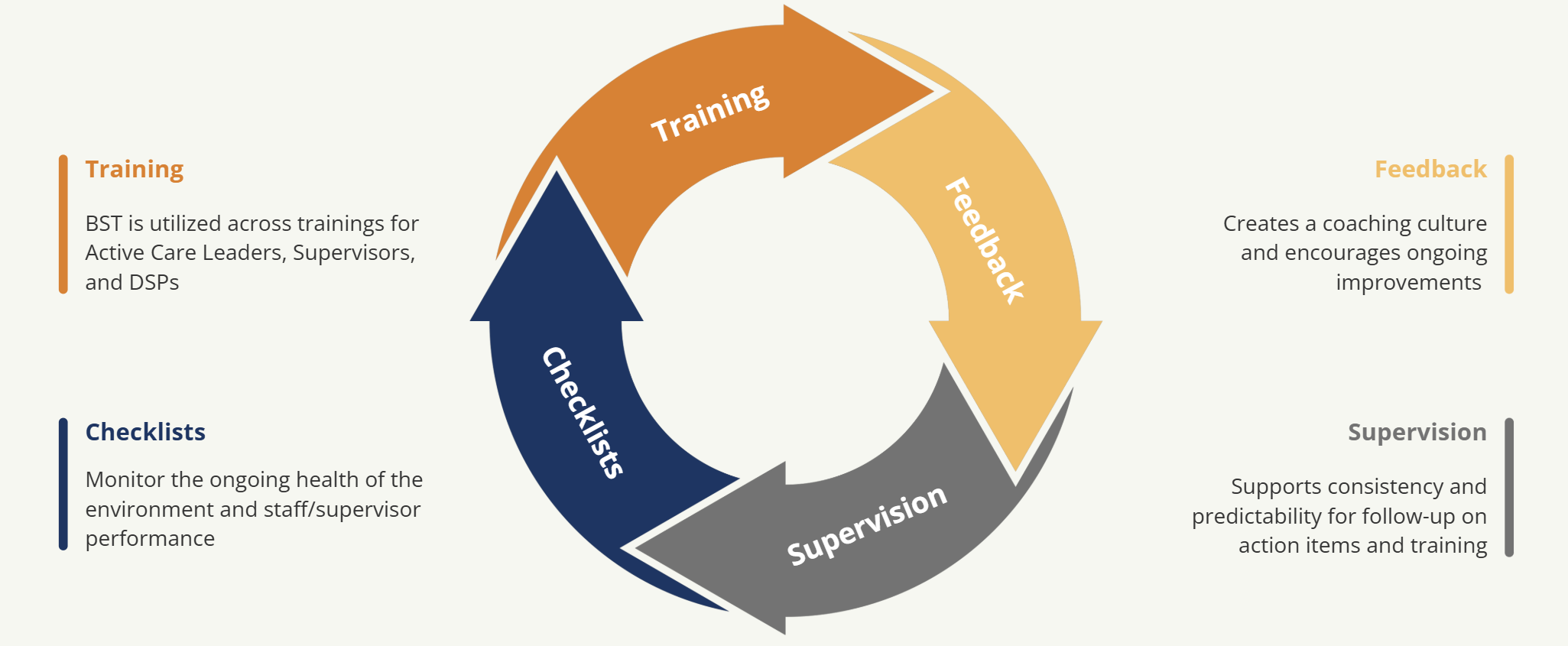
Supervisors master the use of objective checklists to provide real-time coaching. Training focuses on a structured feedback model to ensure staff skills are developed consistently and recognized in the field.
Implementing Schedules
Leadership learns to design high-fidelity schedules that prioritize participant activity. This involves managing environmental systems to eliminate unstructured downtime and align resources with person-centered goals.
Supervision
This focuses on a "working supervisor" model, moving leadership from administrative tasks into active field support. Supervisors learn to model core skills and use data-driven oversight to maintain accountability.
Active Care for Leaders
The Culture of Engagement
Leadership & Culture
Leaders learn to drive cultural change by aligning agency values with Active Care principles. This focuses on building a "coach-approach" environment where engagement is the primary metric of success at every level.
Staff Training
Leaders master the "Train-the-Trainer" curriculum, focusing on Behavioral Skills Training. They learn to deliver impactful online and live instruction, ensuring Supervisors and DSPs achieve high-fidelity performance.
The Accountability Loop
Frequently asked questions
Who in my company can become an Active Care Leader?
Individuals in leadership or clinical roles - such as Program Managers, Directors, or BCBAs - are the best candidates. They must have the authority to model skills on the floor, provide direct feedback to staff, and oversee the implementation of the Active Care system within their service line.
How many Leaders should an agency have to begin the Credentialing process?
While we offer tailored recommendations based on your agency’s size and service volume to ensure adequate coverage, there is no set limit to begin. You are welcome to enroll as many prospective Leaders as you see fit.
What is the time commitment for my staff to achieve the Tier 1 Active Care Credential?
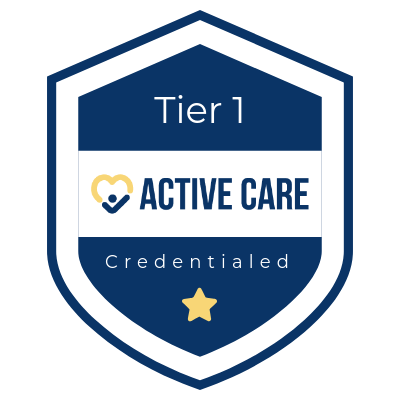
The process begins with approximately 20 hours of core instruction. To earn the full credential, candidates must pass a competency check where an Active Care Consultant verifies their ability to lead Skills Sessions and provide coaching. Once the Consultant ensures the Leader is ready to deliver the model with high fidelity, they are cleared to roll out service-wide training, independently.
If I'm an ACC-1, can I skip the ACC-2 and begin working towards the ACC-3?
Yes. While becoming Tier 1 credentialed is the mandatory first step, you can bypass Tier 2 and move directly toward becoming Tier 3 credentialed.
Can my Leaders just complete the trainings, but not get credentialed?
It is mandatory to have a credentialed, internal expert to lead the live Skills Session to unlock staff's Certificates of Completion. Other Leaders are welcome to complete the train-the-trainer workshop but will not qualify for credentialing unless they are observed completing a Skills Session by an Active Care Consultant.
What happens if a Leader does not meet competency standards for credentialing on the first attempt?
Active Care utilizes Behavioral Skills Training, which prioritizes mastery over "pass/fail" testing. If a candidate doesn't hit the 85% fidelity threshold initially, they receive targeted coaching and a structured remediation plan to rehearse and refine skills until the standard is met.
Ready to Get Started?
Schedule a free demo to learn how our training and accreditation programs can transform your team's practice.